
Author name: p50f

Jennifer MacDonell running joyfully at age 70 with an open road behind her

Jennifer MacDonell Ran a 3:23 Marathon at 70. I’m Taking Notes.

Jennifer MacDonell ran 3:23:59 at age 70 on the same Toronto streets that introduced me to my next version. I’m not comparing our times. I’m paying attention to what her record says about preparation, support and the goals we can keep carrying forward.

, , , , , ,

Jennifer MacDonell Ran a 3:23 Marathon at 70. I’m Taking Notes. Read Post »

Masters Running, Running After 60, Running Journey


Magnus using RPE for running beside pace and heart-rate data after an easy run

RPE for Running: The Number My Watch Can’t Measure

Garmin can record pace, heart rate and cadence, but it can’t feel the run. At 68, I use RPE as the human signal that helps CoachChat interpret the numbers, especially when conditions change or a sensor misbehaves.

, , , , , ,

RPE for Running: The Number My Watch Can’t Measure Read Post »

AI Running Coach Experiment, Running After 50, Testing & Data
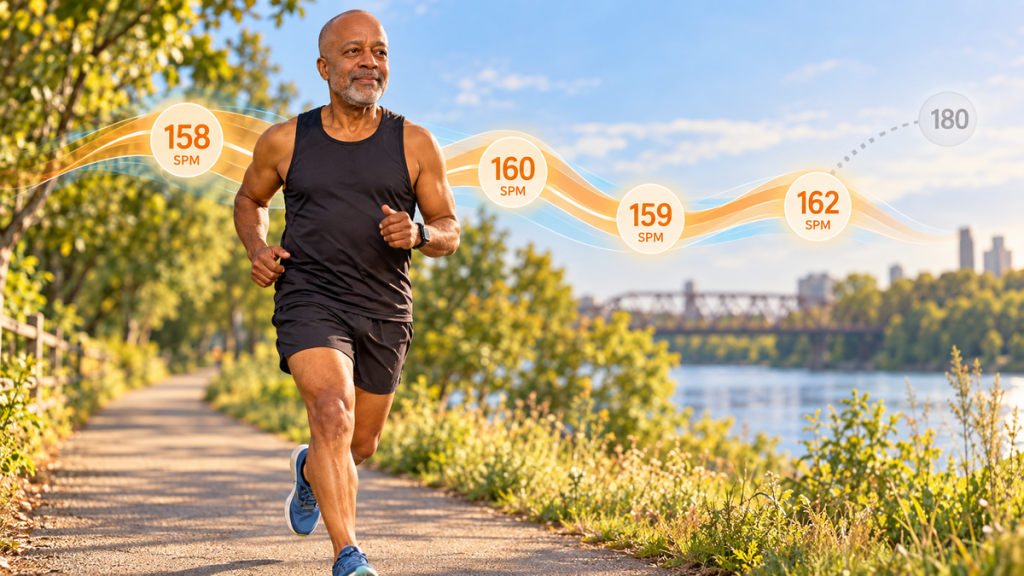
Older Black runner reviewing his natural running cadence without chasing 180 steps per minute

Running Cadence Over 50: Why I’m Not Chasing 180 SPM

At 68, my easy-run cadence often sits well below the famous 180-SPM target. I looked at what the number really means, what the research supports and why my AI coach treats cadence as evidence, not a command.

, , , , ,

Running Cadence Over 50: Why I’m Not Chasing 180 SPM Read Post »

AI Running Coach Experiment, Running After 50, Testing & Data, Training Tips
Older Black runner reviewing provisional heart rate zones after an easy run

Heart Rate Zones for Runners Over 50: Why Mine Are Provisional

My watch can divide a run into tidy coloured zones. The untidy question is whether those zones describe me. Here’s how I used a field baseline, RPE, breathing and later runs to create provisional numbers without pretending they’re laboratory results.

, , , , ,

Heart Rate Zones for Runners Over 50: Why Mine Are Provisional Read Post »

Experiment
Older Black runner examining heart rate drift after an easy run

Was My Easy Run Really Easy? AI, RPE and Heart Rate Drift

Heart rate rose during an easy run. Does that prove the run became too hard? I look at what heart-rate drift can tell an older runner, what can corrupt the number and why my AI coach sometimes refuses to calculate it.

, , , , , ,

Was My Easy Run Really Easy? AI, RPE and Heart Rate Drift Read Post »

AI Running Coach Experiment, Heart Rate Training, Running After 50: Testing & Data
Older Black runner examining the timeline inside a Garmin FIT file after an easy run

What Is a Garmin FIT File? The Runner Behind the Summary

A Garmin activity summary shows the result. The FIT file holds the timeline underneath it. Here’s what that file can tell an AI running coach, what it can’t know, and why the runner’s own report still matters.

, , , , , ,

What Is a Garmin FIT File? The Runner Behind the Summary Read Post »

AI Running Coach Experiment, Running After 50: Testing & Data
Magnus comparing a Strava activity summary with a contextual AI running coach analysis after a humid run

What Strava Missed About My Run, and My AI Running Coach Caught

Strava saw my fastest average pace of the month and two “intervals.” CoachChat saw a humid endurance run, a failing chest strap and enough late-session cost to hold the next week steady. The difference wasn’t smarter AI. It was better context.

, , , , , , ,

What Strava Missed About My Run, and My AI Running Coach Caught Read Post »

AI Running Coach Experiment, Running After 50, Testing & Data
Scroll to Top