Ouch to 10K was not part of the original plan.
I am currently scheduled to enter Week 8 of my build toward the Medavie Bluenose Marathon in Halifax, Nova Scotia on May 17. The goal was 42.2. The goal was steady progression. The goal was confidence heading into the October 2026 TCS Toronto Waterfront Marathon.
Instead, I’ve had to put the brakes on.
When Marathon Training Feels Heavy
For several weeks, my legs have felt perennially heavy. Not sore. Not injured. Just… heavy. Some have suggested low iron as a possible culprit. My ferritin results are pending, and that may yet become part of this story.
Winter has not helped. Outdoor running has been inconsistent due to severe cold and heavy snowfall. I moved many workouts indoors, spending time on an indoor track for the first time, which I thoroughly enjoyed. I also became reacquainted with the treadmill.
I’ve learned to embrace the treadmill. It demands mechanical adjustment. It rewards rhythm. It punishes ego pacing.
But then came the real signal.
The Return of Posterior Tibialis
My previous posterior tibialis injury re-emerged. This time, it brought a mild shin splint along for company.
That was the moment of clarity.
I spent the better part of a week moping and woe-is-me-ing. That’s allowed. But only briefly.
Now it’s time to get back to work.
Why the 42.2 Can Wait
The 42.2 in May is likely a no-go.
That decision is not driven by ego. It is driven by experience.
The May race is a runcation in a city my wife holds dear. The goal is to show up healthy, toe a start line, and enjoy the experience. I am fully prepared to run the 21.1 or the 10K.
The marathon can wait for October 2026 at the TCS Toronto Waterfront Marathon.
If I am going to run 42.2 again, I want to do it properly.
Rebuilding the Engine: The Ouch to 10K Plan
The focus now shifts to maintaining and strengthening my aerobic engine while allowing the injured tissue to calm down.
Here is the plan:
- Structured indoor cycling to mimic:
- Easy runs
- Long runs
- Long runs with embedded progressions
- Quality sessions
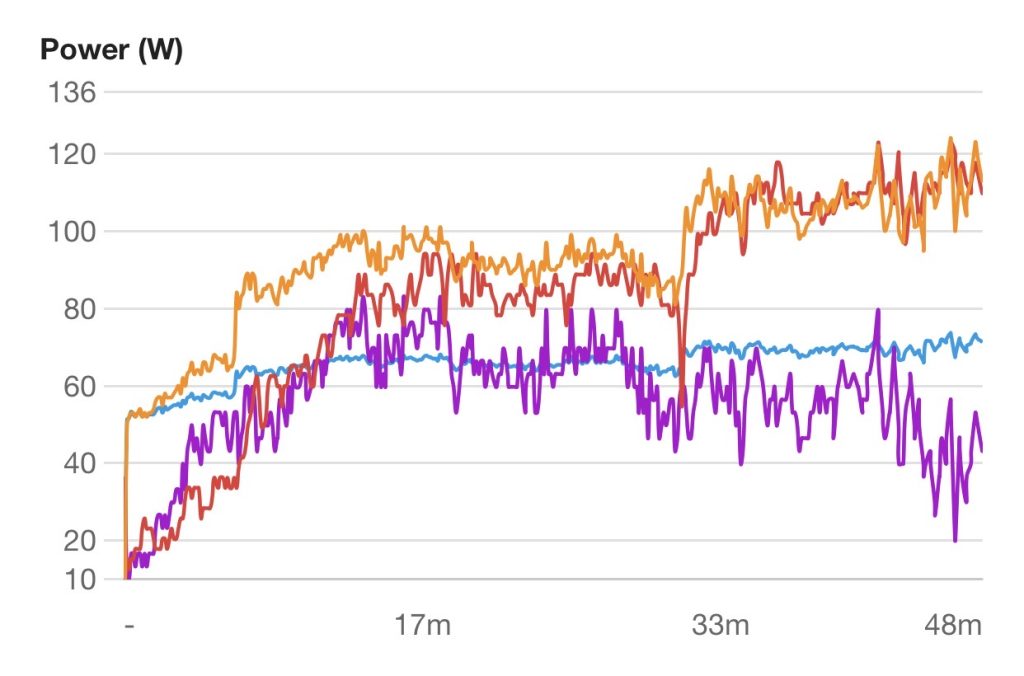
- One controlled high-intensity cycling session per week
- Two strength sessions weekly
- Daily posterior tibialis rehab work
- Mobility emphasis
Cycling allows me to preserve stroke volume and aerobic conditioning without the impact load of running. Strength training reinforces tissue durability. Mobility work improves mechanics.
This is not a fallback plan.
This is a pivot plan.
What Ouch to 10K Will Document
Each week in the Ouch to 10K series, I will document:
- What I trained
- What the data showed
- How the injury responded
- What surprised me
- What I would adjust
This will not be a coaching prescription. It will simply be what I did.
If you are navigating posterior tibialis irritation, shin splints, winter treadmill adaptation, or suspected low iron, perhaps something here will resonate.
The Bigger Goal
The May race is about shared experience. The October race is about performance.
The long game is about running strong well into my late 60s and beyond.
Ouch to 10K begins not with a finish line, but with a recalibration.
And recalibration is still forward progress.